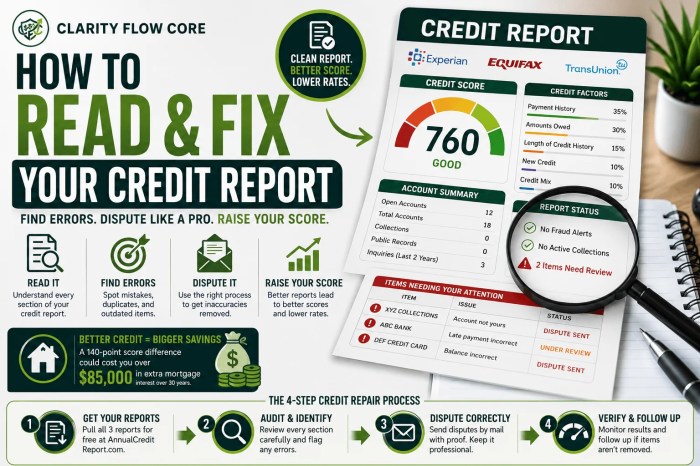
Crafting a Strong Credit Score Repair Strategy
In today’s financial landscape, the importance of credit score repair cannot be overstated. Understanding the nuances of credit scores and how to improve them is crucial for financial well-being. This article delves into the intricacies of credit score repair, offering valuable insights and practical tips.
Exploring the key components of credit score repair and debunking common myths, this guide aims to empower individuals to take control of their financial future.

A credit score is a numerical representation of an individual’s creditworthiness, based on their credit history and financial behavior. It is a crucial factor that lenders use to determine whether to approve loan applications and at what interest rates.
Repairing a credit score is necessary to improve one’s financial health and increase access to better loan terms and interest rates. A low credit score can limit opportunities for obtaining credit, renting an apartment, or even securing employment.

Credit reports are detailed records of an individual’s credit activity, including information about their credit accounts, payment history, outstanding debts, and inquiries made by lenders. These reports are compiled by credit bureaus and used by lenders to assess an individual’s creditworthiness.
Under the Fair Credit Reporting Act, consumers are entitled to one free credit report from each of the major credit bureaus (Equifax, Experian, and TransUnion) every 12 months. To obtain a free credit report:
When reviewing a credit report, it’s essential to understand the information presented. Here are some key points to consider:
Improving your credit score is essential for financial stability and access to better opportunities. By following these steps, you can work towards building a positive credit history and increasing your credit score.
Building a positive credit history is crucial for improving your credit score. Here are some tips to help you establish good credit:
Reducing your debt is an important step in improving your credit score. Here are some ways to reduce debt and boost your credit score:
Making timely payments is crucial for maintaining a good credit score. Here’s why timely payments are important:
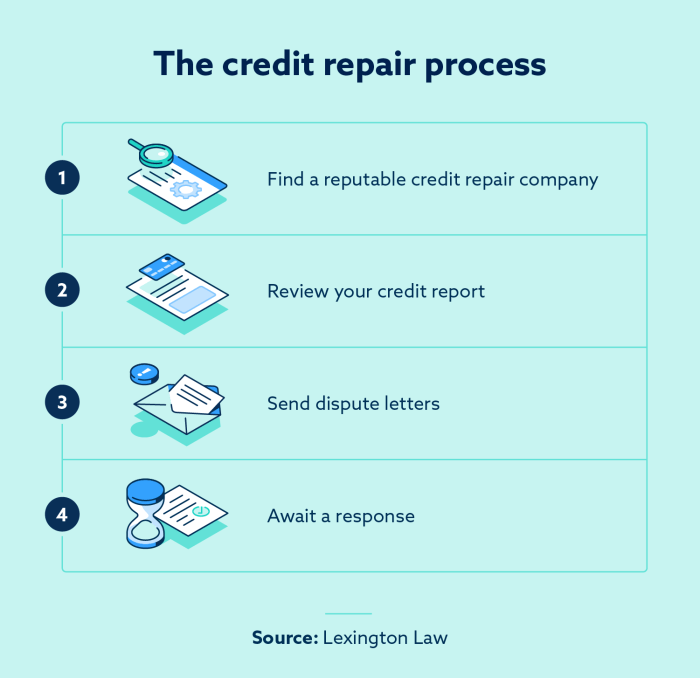
When faced with debts and collection accounts, it’s essential to know how to handle negotiations with creditors and strategies for dealing with debt collectors. Here are some tips to help you navigate through these challenging situations:
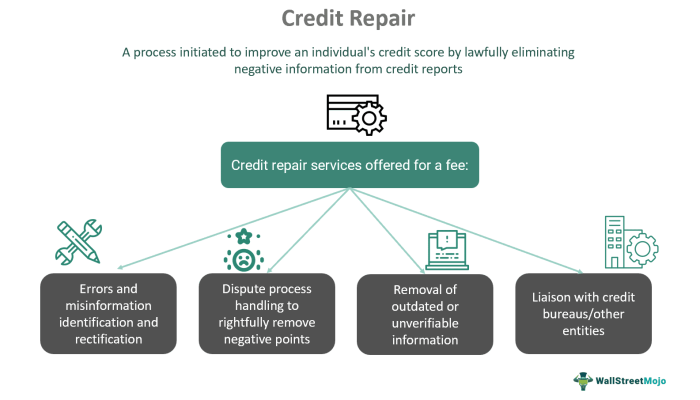
There are many myths surrounding credit scores that can lead to confusion and misinformation. It’s important to separate fact from fiction when it comes to understanding how credit scores work and what can impact them.
Navigating the realm of credit score repair can seem daunting, but armed with the right knowledge and strategies, individuals can make significant improvements to their credit health. By implementing the steps Artikeld in this guide, readers can embark on a journey towards a stronger financial foundation and greater peace of mind.
How long does it take to improve a credit score?
Improving a credit score is a gradual process and the timeline can vary based on individual circumstances. Consistent positive financial habits can lead to gradual improvement over time.
Can I repair my credit score on my own?
Yes, individuals can take steps to repair their credit score on their own by understanding their credit report, making timely payments, and reducing debt.
Will settling debts with creditors improve my credit score?
Settling debts with creditors can have a positive impact on your credit score, as it shows a proactive approach to resolving outstanding debts.
Is it true that checking my credit report can lower my score?
No, checking your own credit report does not lower your credit score. This type of inquiry is considered a soft inquiry and does not impact your score.