Debt Settlement vs Credit Repair: How Each Option Affects Your Credit Score
As Debt Settlement vs Credit Repair: How Each Option Affects Your Credit Score takes center stage, this opening passage beckons readers with casual formal language style into a world crafted with good knowledge, ensuring a reading experience that is both absorbing and distinctly original.
In the following paragraphs, we will delve into the differences between debt settlement and credit repair, exploring their goals, impact on credit scores, and suitability in various situations.
Debt settlement and credit repair are two different approaches to managing debt and improving credit scores. Debt settlement involves negotiating with creditors to pay off a portion of the debt, usually in a lump sum, while credit repair focuses on improving credit scores by addressing inaccuracies and negative items on credit reports.

Debt settlement is a process where a debtor negotiates with creditors to pay off a portion of the debt, usually in a lump sum payment. This option is often pursued when individuals are unable to pay their debts in full and need to find a way to resolve their financial obligations.
Debt settlement typically involves the following steps:
Debt settlement can have both short-term and long-term effects on credit scores:
In the short term, debt settlement can lead to a decrease in credit score due to missed payments and the settlement itself. However, in the long term, as the debt is resolved, the impact on credit score may improve.
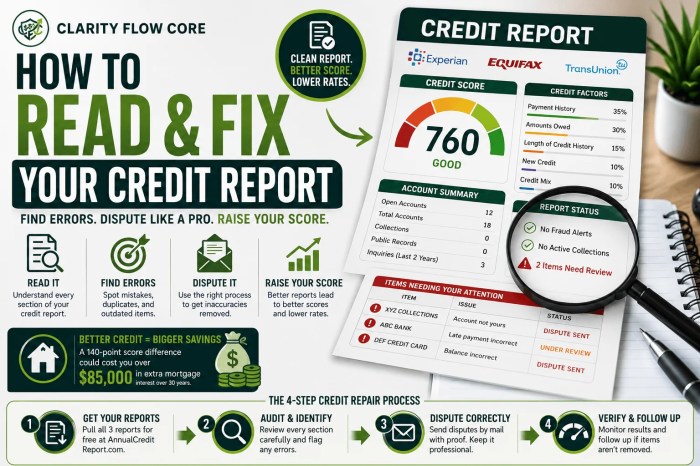
When it comes to credit repair, there are specific strategies that individuals can use to improve their credit scores. One common approach is disputing inaccuracies found on credit reports, which can help to rectify errors and boost creditworthiness.
Improvements in credit scores through credit repair can vary depending on the individual’s situation. Typically, it may take several months to a year to see significant changes in credit scores after implementing repair strategies consistently.
Myth:
Credit repair is a quick fix for bad credit.
Myth:
Credit repair companies can magically erase negative information from credit reports.
Myth:
Closing old accounts will improve your credit score.
Best Practices for Maintaining a Good Credit Score
- Pay bills on time and in full to demonstrate responsible credit management.
- Keep credit card balances low to maintain a healthy credit utilization ratio.
- Avoid opening unnecessary new credit accounts to prevent inquiries that could lower your score.
Impact on Credit Score

When it comes to debt settlement and credit repair, understanding how each option affects your credit score is crucial. Let’s delve into the details.
Debt settlement can have both positive and negative impacts on different aspects of your credit score. Here’s how it affects:
Debt settlement can have long-term effects on your credit score and creditworthiness. While it may initially lower your score due to settlement not being paid in full, over time, as you continue to make on-time payments and reduce your debt, your score can gradually improve.
Comparing the impact of credit repair with debt settlement, it’s important to note that credit repair focuses on removing negative items from your credit report, while debt settlement involves negotiating with creditors to settle debts. Both can have varying impacts on credit scores.
There are individuals who have successfully improved their credit scores through debt settlement or credit repair. For example, John managed to increase his credit score by 100 points within a year after settling his debts, while Sarah saw a significant improvement in her credit score after working with a credit repair company to remove inaccuracies from her report.
Is debt settlement or credit repair a better option for improving credit scores?
The choice between debt settlement and credit repair depends on individual circumstances. Debt settlement may be more suitable for those with overwhelming debt, while credit repair can help address inaccuracies on credit reports.
How long does it take to see improvements in credit scores through credit repair?
The timeline for seeing improvements in credit scores through credit repair varies depending on the complexity of the issues being addressed. It can range from a few months to a year or more.
Can debt settlement or credit repair completely erase negative marks on a credit report?
Debt settlement and credit repair can help improve credit scores but may not completely erase all negative marks on a credit report. It is essential to manage expectations and work towards long-term financial health.